
Commercial roofs rarely fail overnight. In almost every emergency call we take, the roof had been sending signals for months, sometimes years, before water finally reached the inventory, the drop ceiling or the production floor. Catching those signals early is the difference between a repair bill and a replacement bill. Here are the five we see most often on low-slope roofs across the Fox Valley.
1. Ponding water that lasts more than 48 hours
Flat roofs are never perfectly flat; they are designed with a slight slope to drains and scuppers. When water is still standing two days after a rain, something has changed: a clogged drain, a sagging deck, insulation that has crushed under rooftop traffic, or a membrane that has stretched. Standing water adds weight (about five pounds per square foot per inch), accelerates membrane aging and, in winter, becomes an ice sheet that lifts seams. Walk the roof after the next heavy rain and note where the puddles are. If they are in the same spots every time, have them evaluated.
2. Open seams, blisters and bubbles
On single-ply systems like Thermoplastic Polyolefin (TPO) and Ethylene Propylene Diene Monomer (EPDM), the seams are the roof. A seam that has begun to peel, or a membrane that shows blisters where air or moisture is trapped underneath, is the most common source of leaks we repair. Blisters on modified bitumen and built-up roofs mean the same thing: the layers have separated and water is finding its way in. Small seam repairs are inexpensive. Waiting until wet insulation has spread across a section is not.
3. Water stains, rust or damp insulation inside
The first evidence of a roof problem often shows up below the roof: brown rings on ceiling tiles, rust streaks on the deck or on joists, damp spots on the top of the insulation, or a musty smell in a corner of the warehouse. By the time you see a drip, the water has usually been traveling along the deck for a while, which is why the leak inside rarely lines up with the hole above. A moisture survey can find the wet area before the whole section has to come out.
4. Damaged flashings around penetrations and edges
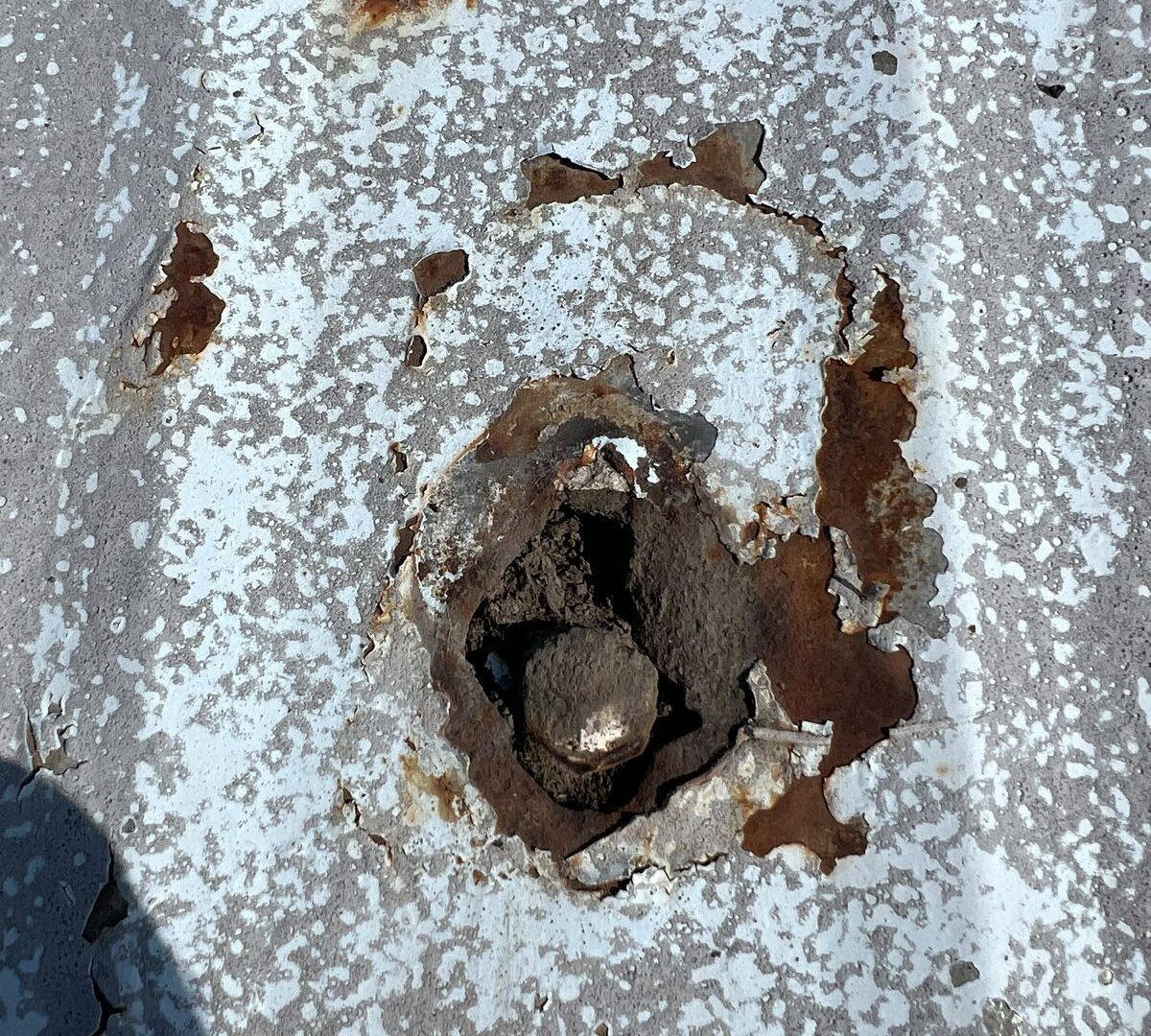
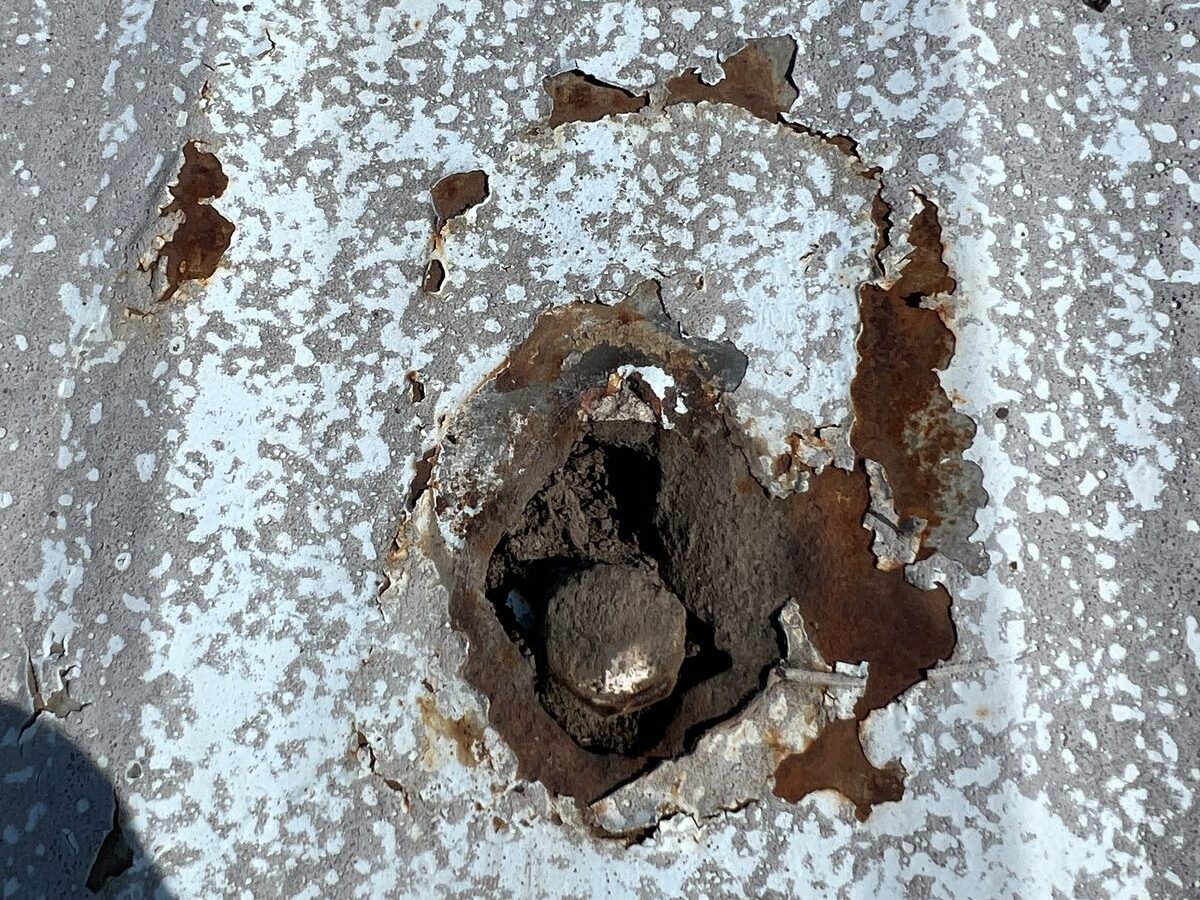
Roofs leak at the details: rooftop units, curbs, pipes, skylights, parapet walls and the metal edge. Flashings work hard. They expand and contract with every temperature swing, and in Wisconsin that can be 140 degrees between a January night and a July afternoon. Cracked sealant, lifted flashing, rusted counterflashing and missing termination bar fasteners are all signs the details need attention, even when the field of the roof looks fine.
5. Storm damage you have not looked for
Hail, straight-line winds and the ice storms we get in late winter all leave marks that are easy to miss from the ground. Punctures from hail, membrane scoured by wind, displaced ballast, and HVAC panels or debris blown across the roof surface can all start a leak that will not show up until the next thaw. After any significant storm, a quick inspection with photos is cheap insurance, and it is the documentation you will need if there is an insurance claim later.
What to do next
None of these signs means a roof is finished. Most of them are repairable if they are caught early, and a scheduled maintenance program will catch nearly all of them before they become a problem. If you have noticed one or more of these on your building, call the office or request an inspection. We will walk the roof, document what we find with photos and give you an honest recommendation, whether that is a repair, a maintenance plan or a replacement.