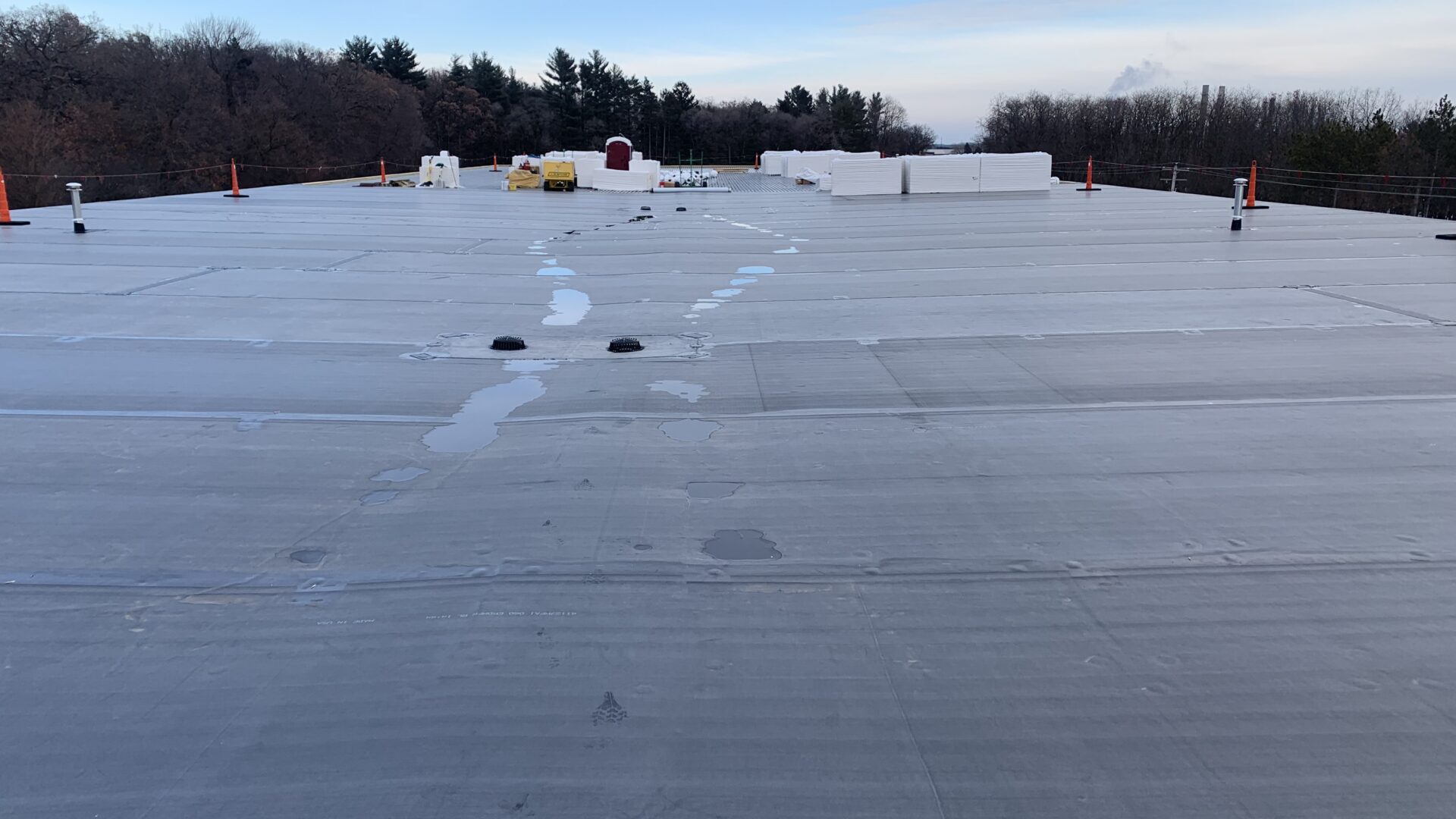
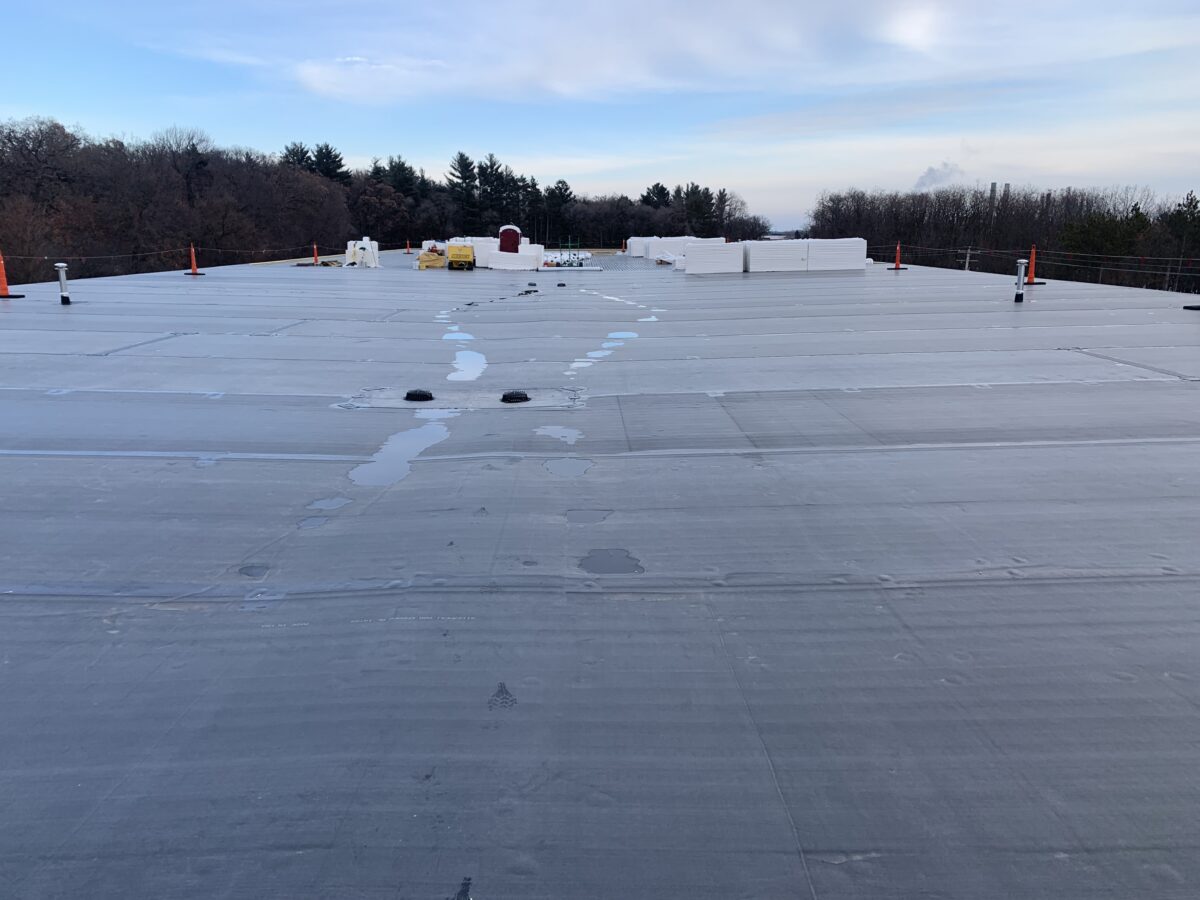
Ethylene Propylene Diene Monomer (EPDM) roofing is the black rubber membrane that has protected warehouses, schools, plants and office buildings across the northern United States for more than fifty years. It is simple, economical, flexible in the cold and easy to repair, and it remains a sensible choice for many commercial buildings in Northeast and Central Wisconsin. This page explains the material, how it is installed and where it fits.
What Is Ethylene Propylene Diene Monomer (EPDM) Roofing?
EPDM is a synthetic rubber, chemically related to the rubber in automotive hoses and weather seals, that is rolled into sheets and cured so it holds its properties for decades. It is sold in non-reinforced and polyester-reinforced versions, commonly in 45, 60 and 90 mil thicknesses, and in sheets up to 50 feet wide, which means a large open roof can be covered with very few seams. The standard sheet is black. White EPDM exists but is less common. Because the membrane is a cured rubber rather than a thermoplastic, it cannot be heat welded; seams are made with primer and factory-made seam tape or a splice adhesive.
How an EPDM Roof Is Installed
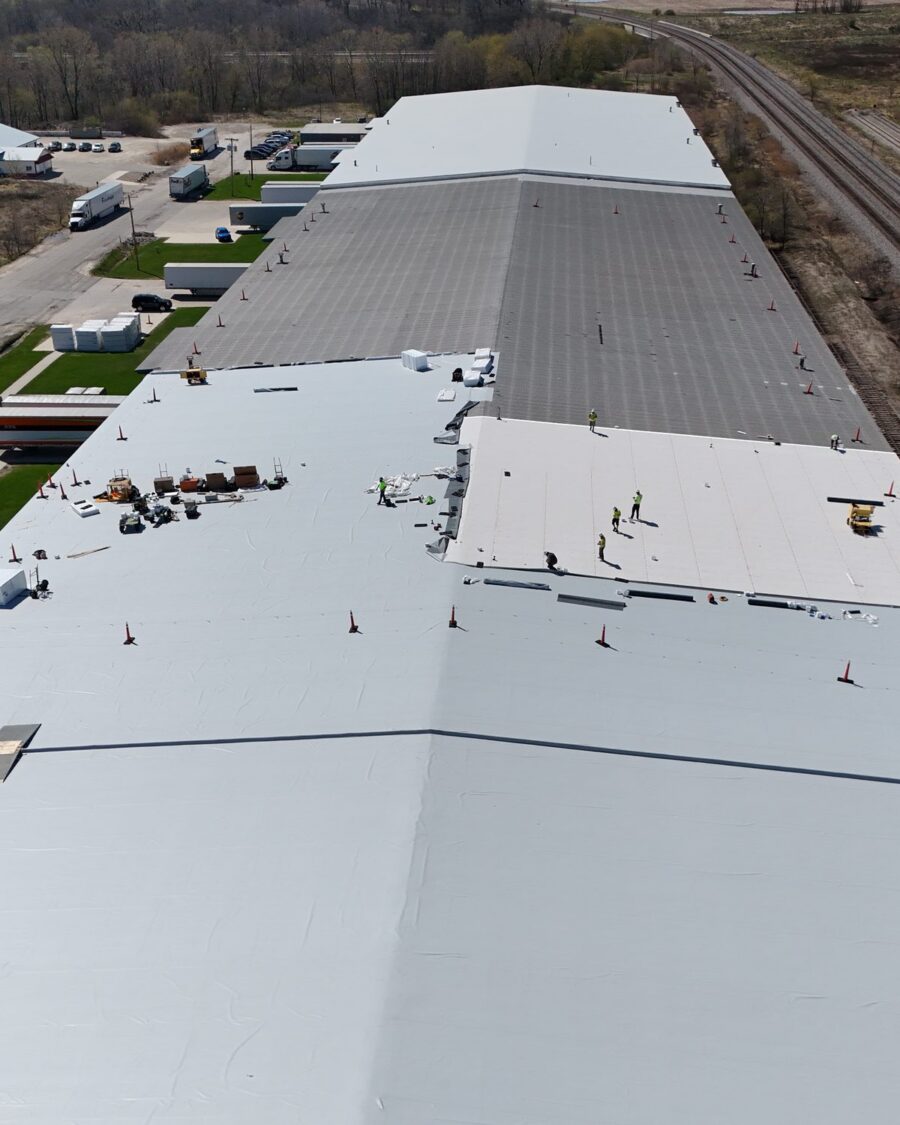
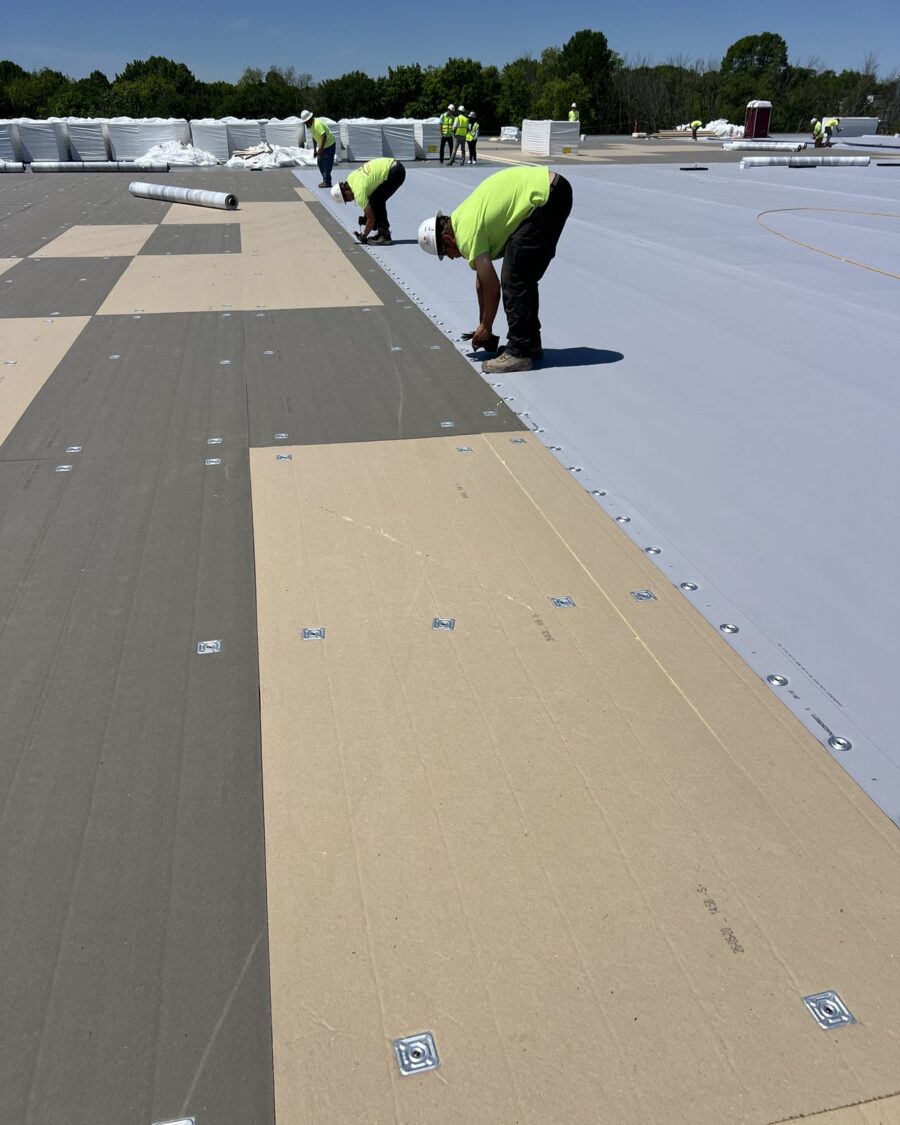
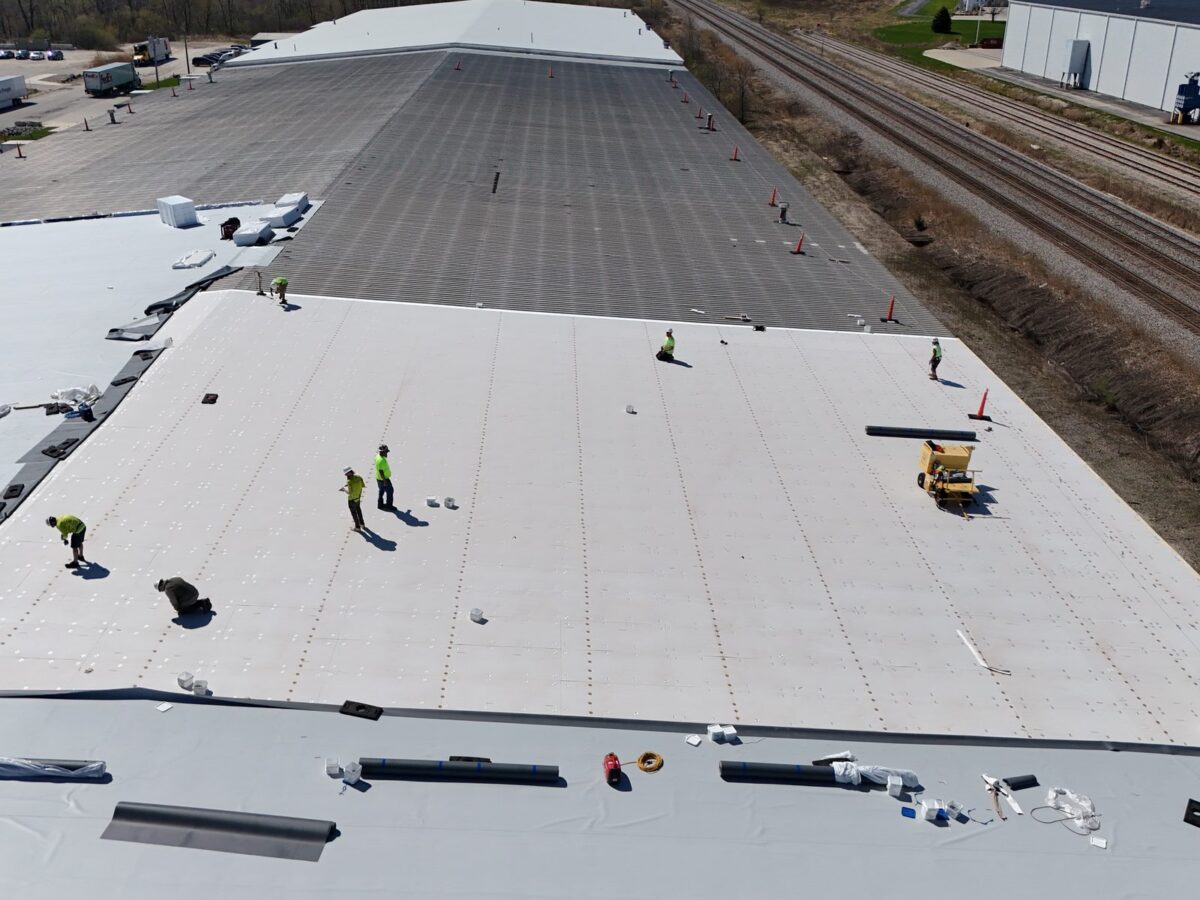
After the substrate is prepared, usually new polyisocyanurate insulation in two staggered layers over a sound deck, the membrane goes down in one of three ways. A ballasted system lays the sheet loose and holds it in place with round river stone or concrete pavers; it is fast and inexpensive but heavy, and the structure must be able to carry the load. A fully adhered system bonds the sheet to the insulation or cover board with adhesive, and is the most common approach on retrofits today. A mechanically fastened system uses batten strips or fastening plates through the sheet. Seams are cleaned, primed and joined with seam tape rolled under pressure; flashings at walls, curbs and penetrations use uncured EPDM flashing that can be shaped around corners. Edge metal, termination bars and sealant finish the perimeter.
Why EPDM Works in Wisconsin
The defining trait of EPDM is that it stays rubbery at temperatures far below anything a Wisconsin winter produces. It stretches and recovers through freeze-thaw cycles and building movement without cracking, which is why so many thirty-year-old EPDM roofs in the region are still performing. The membrane also tolerates standing water and ultraviolet exposure well. Its weakness is the opposite season: a black roof absorbs summer sun and runs hot, which raises cooling loads on air-conditioned buildings and speeds up aging of the sheet. On an unconditioned warehouse that matters little; on an office building it is a real cost.
EPDM vs. TPO vs. PVC
Thermoplastic Polyolefin (TPO) and Polyvinyl Chloride (PVC) are both white, heat-welded thermoplastic membranes. Their welded seams are generally considered stronger and more consistent than a taped EPDM seam, and their reflective surface cuts summer cooling costs. EPDM counters with the longest cold-weather track record of the three, excellent elongation, simple repair methods and, on large ballasted or mechanically fastened roofs, a lower installed cost. PVC adds grease and chemical resistance that neither EPDM nor TPO matches. In practice the choice comes down to whether the building is air conditioned, how much the roof moves, and budget.
Best Applications
EPDM is a strong fit for large warehouses and industrial buildings with little or no air conditioning, for structures that can carry a ballasted roof, for buildings that experience movement or vibration, and for owners who want the lowest first cost with a proven material. It is a weaker choice above kitchens, where oils and grease attack the rubber, and on buildings where summer cooling is a major expense.
Maintenance and Repair
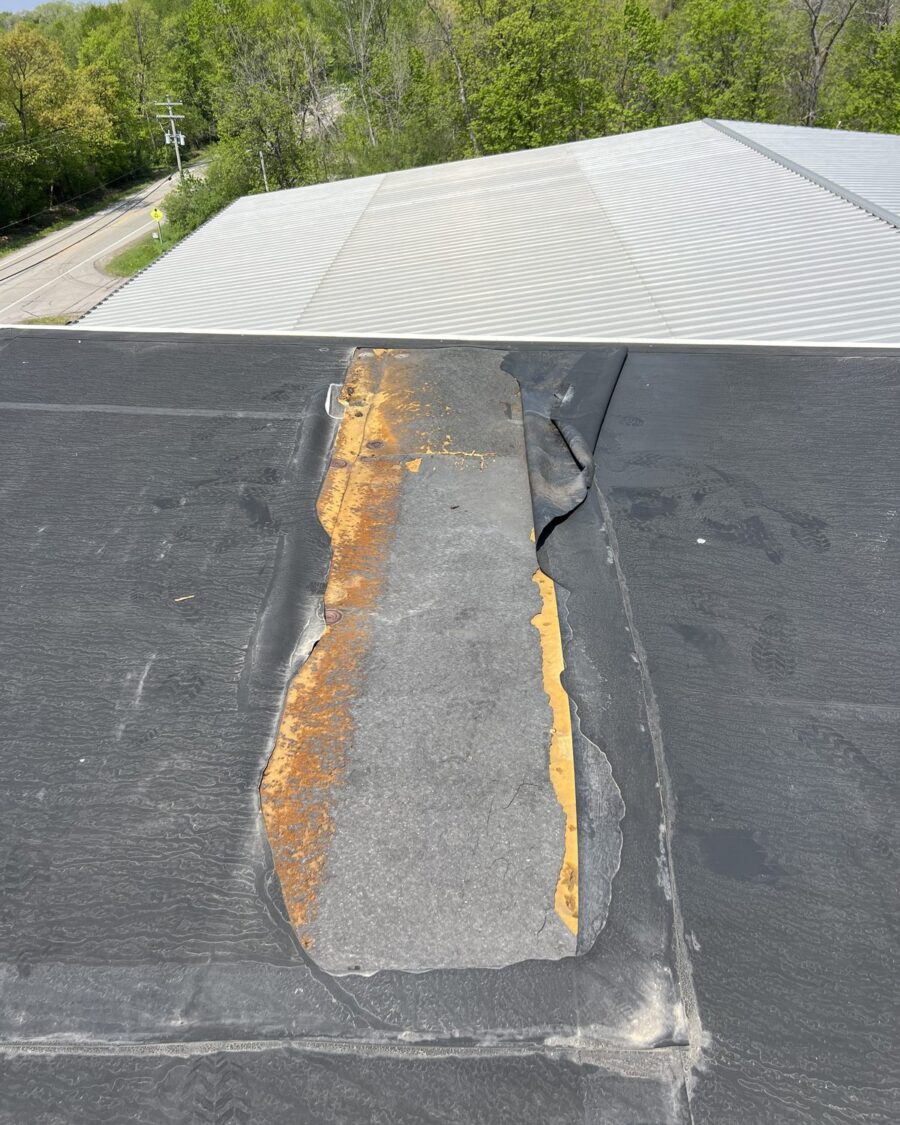
Twice-a-year inspections focus on the seams, the flashings and the drains. Seam tape and adhesive can lift at the edges after many seasons; caught early, the fix is a clean, prime and re-tape. Punctures are patched with EPDM cover tape. A weathered EPDM roof with dry insulation can also be restored with an acrylic or urethane coating system, which seals the seams and, in white, finally gives the roof a reflective surface. Older ballasted roofs sometimes need the stone moved aside to inspect, which is one reason they are inspected less often than they should be.
Is EPDM Right for Your Building?
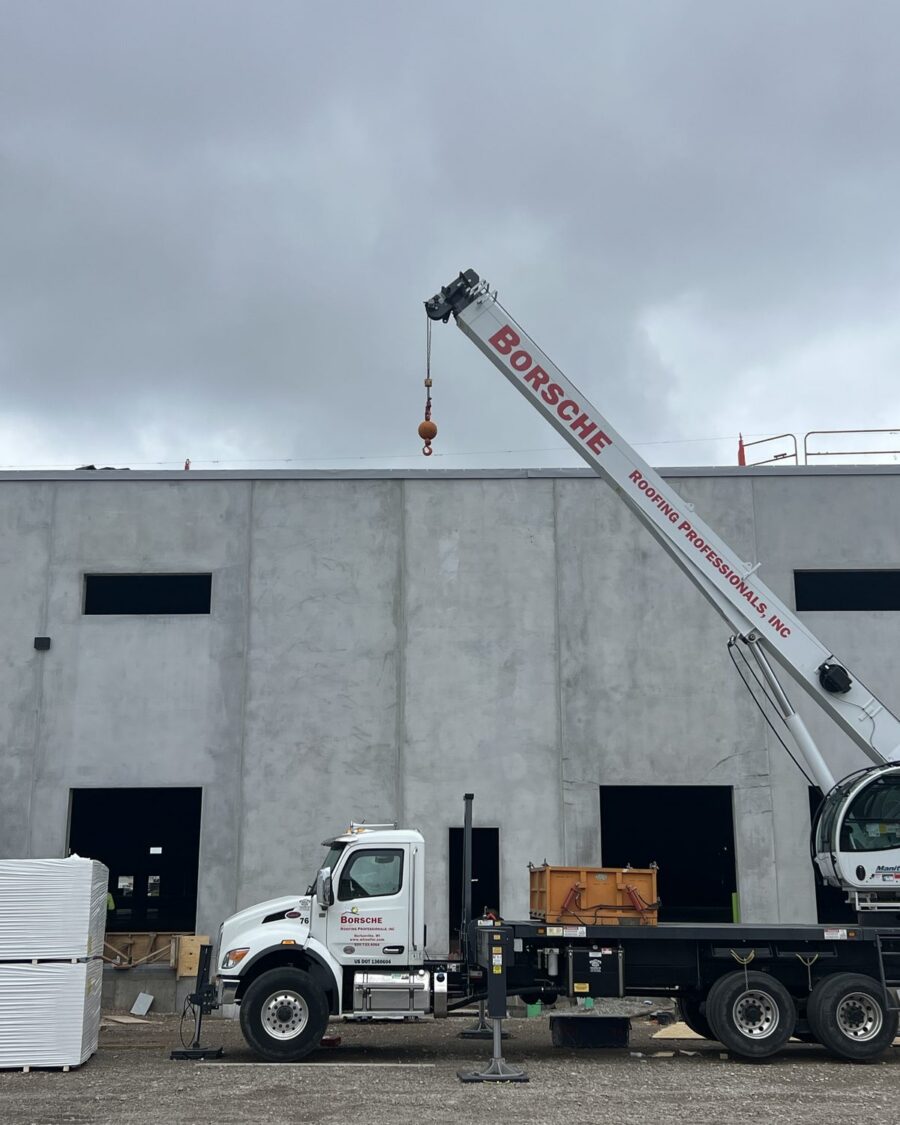
If your building is a large, lightly conditioned warehouse or plant, or if you already have an EPDM roof that has served well, EPDM deserves a serious look. Borsche Roofing Professionals has installed and repaired EPDM for decades alongside TPO, PVC, modified bitumen, built-up and metal systems, and we will give you a straight comparison for your building. Call for a free estimate and consultation.