Storm Damage

Commercial Roofing Services

Storm Damage

What We Do

Storm Damage

Hail, straight-line winds and ice storms hit Northeast Wisconsin every year. When a storm damages your roof, we respond quickly, protect the building, document the damage for your claim and make it right.

  • Emergency response and temporary protection
  • Hail, wind and ice damage repair
  • Photo documentation for insurance claims
  • Experience working with adjusters
  • Permanent repair or replacement once approved
  • All commercial roof systems
Commercial Storm Damage by Borsche Roofing Professionals

Northeast Wisconsin gets hail most summers, straight-line winds several times a year and ice storms most winters, and commercial roofs take the brunt of all of it. Borsche Roofing Professionals has repaired storm-damaged commercial roofs across the region for decades and has worked alongside insurance adjusters on hundreds of claims.

Types of Storm Damage We Repair

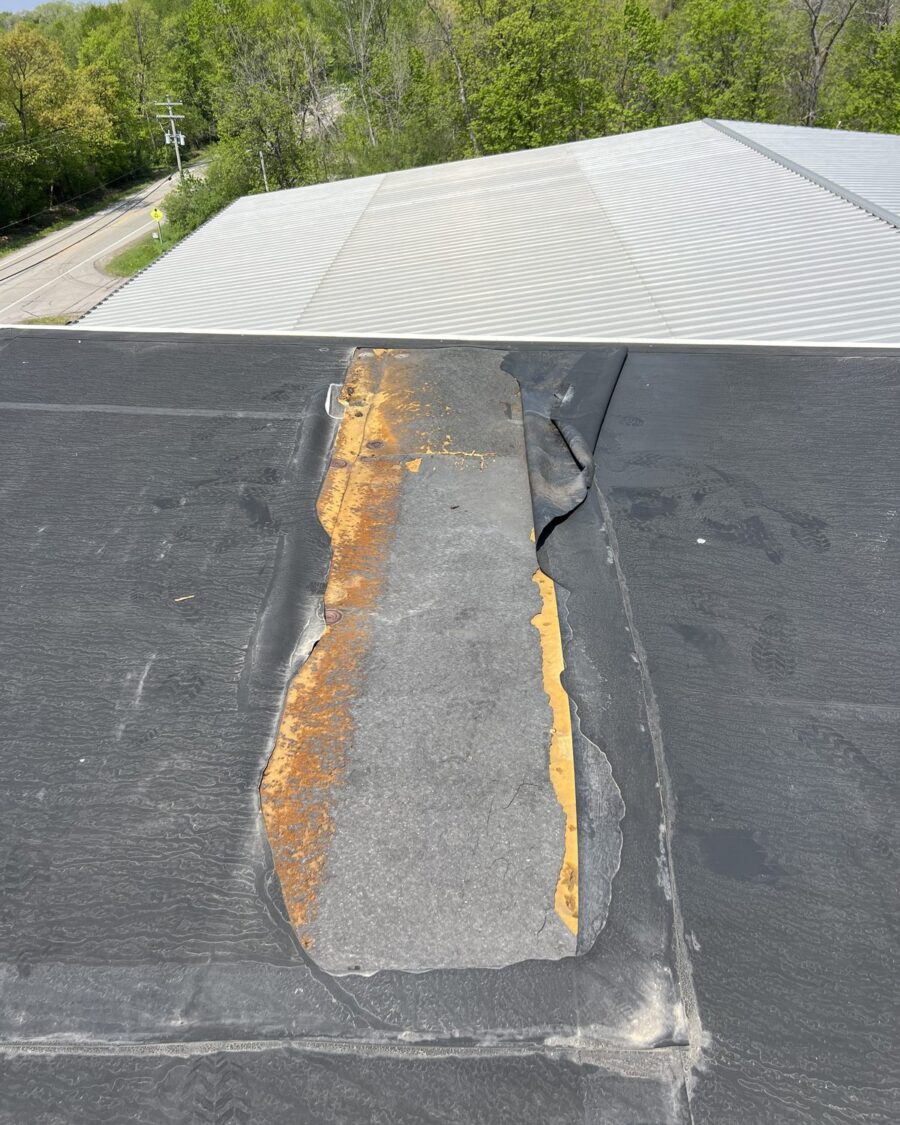
Hail bruises, fractures and punctures single-ply membranes and dents and cracks metal roofs and coatings. Wind lifts and tears membranes, especially at edges and corners, displaces ballast and blows debris and equipment panels across the roof. Ice and snow open seams and flashings through freeze-thaw cycling, and ice dams back water into the details. We repair all of it on every commercial roof system.

Emergency Response

When a roof is actively leaking, the first job is to stop the water. We install temporary protection the same day where possible, so inventory, equipment and finishes are protected while the permanent repair is scheduled and the insurance claim moves forward.

Insurance Claim Support

A storm claim is won or lost on documentation. We photograph and measure the damage across the entire roof in the format adjusters expect, provide a written report, and meet the adjuster on site when requested so the scope is agreed on the roof. We do not inflate claims and we do not miss damage; both cost the building owner in the end.

Permanent Repairs and Replacement

Once the claim is approved, we complete the permanent repairs or, when the damage is widespread, replace the roof with a system that will hold up to the next storm. Either way you receive photo documentation and warranty paperwork at closeout.

Get Ahead of the Next Storm

The roofs that come through storms best are the ones that were tight beforehand. A maintenance program with a baseline photo record also makes any future claim far easier to prove. Ask us about it when you call.
How It Works

The Storm Damage Process

  1. 01

    Call us first

    If the roof is leaking, we get temporary protection in place so the damage does not spread while the claim is processed.

  2. 02

    Document

    We inspect the entire roof and photograph and measure the damage in the format adjusters expect.

  3. 03

    Meet the adjuster

    We can walk the roof with your insurance adjuster so nothing is missed and the scope is agreed on the spot.

  4. 04

    Repair or replace

    Once the claim is approved, we complete the permanent repairs or replacement and provide the closeout documentation.

Every Major System

Systems We Use for Storm Damage

Compare All Systems

Thermoplastic Polyolefin (TPO)

White, heat-welded single-ply membrane. Reflective, puncture resistant and the most common choice for new and replacement roofs on warehouses, plants and offices.

Best for: Large open roofs, cooling savings Learn more

Ethylene Propylene Diene Monomer (EPDM)

Black synthetic rubber with decades of history in cold climates. Very flexible through freeze-thaw cycles; available white for reflectivity.

Best for: Roofs with many details, long-term flexibility Learn more

Polyvinyl Chloride (PVC)

Heat-welded membrane that resists grease, oils and chemicals. The right system over kitchens, food processing and manufacturing exhaust.

Best for: Restaurants, food processors, chemical exposure Learn more

Modified Bitumen

Multi-ply asphalt system with a granulated cap sheet. Tough under heavy foot traffic and rooftop equipment service.

Best for: Roofs with heavy maintenance traffic

Built-Up Roofing (BUR)

The traditional tar-and-gravel roof: alternating plies of asphalt and reinforcing felt topped with gravel or a cap sheet. Thick, redundant and proven.

Best for: Redundant waterproofing, older buildings

Metal Roofing

Standing seam and pre-engineered metal panels for sloped and architectural roofs. Long service life with minimal maintenance.

Best for: Sloped roofs, schools, municipal buildings

Why Choose Borsche

A Roofing Partner
You Can Count On.

For more than 80 years, we've delivered workmanship, integrity and service that businesses rely on.

Learn More
  • 80+ Years of Experience
  • Skilled, Certified
    Roofing Professionals
  • Safety
    First Approach
  • Locally Owned
    & Operated

Good to Know

Storm Damage FAQs

Ready to talk about your roofing project?

Let's build a solution that lasts.

Get a Quote