Inspections

Commercial Roofing Services

Inspections

What We Do

Inspections

Whether you are buying a building, planning next year's budget, filing an insurance claim or trying to understand a leak, a thorough inspection with a written report is the place to start.

  • Full walk-through of the roof and every detail
  • Moisture surveys for wet insulation
  • Written report with photos and recommendations
  • Pre-purchase and due diligence inspections
  • Insurance claim documentation
  • Clear repair, maintain or replace recommendation
Commercial Inspections by Borsche Roofing Professionals

A good roof inspection replaces guesswork with facts. Borsche Roofing Professionals inspects commercial and industrial roofs across Northeast Wisconsin for building owners, buyers, property managers and insurers, and every inspection ends with a written report you can act on.

Types of Inspections We Provide

Condition inspections for owners who want to know where the roof stands and what to budget. Leak inspections to trace an active problem to its source. Pre-purchase and due diligence inspections for buyers and lenders. Insurance claim inspections after hail, wind and ice events. Warranty inspections to document the roof before a warranty period ends. And storm inspections after any significant weather.

What We Look At

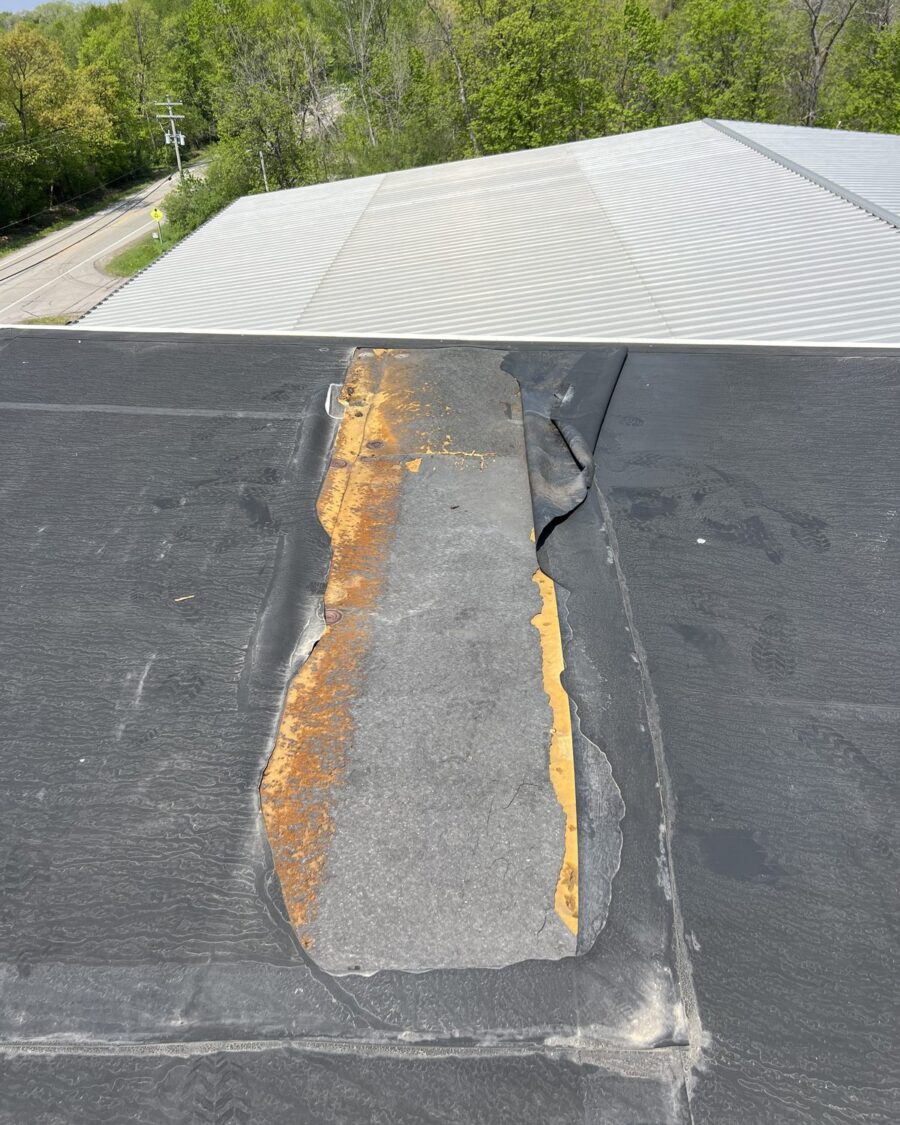
The whole roof, not a sample. Field membrane condition, every seam, every flashing at units, curbs, pipes and walls, drains and scuppers, metal edge and coping, expansion joints, rooftop equipment and its supports, walkway pads, and evidence of ponding. Inside the building we look for staining, rust and damp insulation that tell us where water has been.

Moisture Surveys

Wet insulation is invisible from the roof surface and is the most expensive problem a roof can hide. Where the inspection suggests moisture, we survey the roof to map how far it has spread. That map determines whether a roof can be repaired or recovered, or needs to be replaced, and it is the difference between a proposal based on evidence and one based on a hunch.

The Report

Every inspection produces a written report with photos of each finding, a condition rating, an estimate of remaining service life and a recommendation with budget ranges. It is written for owners and managers, not for roofers, and it is the document you will use to plan, to negotiate a purchase or to support a claim.

Inspections for Property Portfolios

For managers with several buildings we inspect all of them in one season and deliver a portfolio summary alongside the individual reports, so capital planning can be done across the whole group.
How It Works

The Inspections Process

  1. 01

    Schedule

    Most inspections are scheduled within a few business days; active leaks sooner.

  2. 02

    Inspect

    We walk the whole roof, check every seam, flashing, penetration, drain and edge, and look at the deck and insulation.

  3. 03

    Test

    Where a leak or soft spot suggests wet insulation, we do a moisture survey to map how far it has spread.

  4. 04

    Report

    You receive a written report with photos, a condition rating and a plain-language recommendation with budget ranges.

Every Major System

Systems We Use for Inspections

Compare All Systems

Thermoplastic Polyolefin (TPO)

White, heat-welded single-ply membrane. Reflective, puncture resistant and the most common choice for new and replacement roofs on warehouses, plants and offices.

Best for: Large open roofs, cooling savings Learn more

Ethylene Propylene Diene Monomer (EPDM)

Black synthetic rubber with decades of history in cold climates. Very flexible through freeze-thaw cycles; available white for reflectivity.

Best for: Roofs with many details, long-term flexibility Learn more

Polyvinyl Chloride (PVC)

Heat-welded membrane that resists grease, oils and chemicals. The right system over kitchens, food processing and manufacturing exhaust.

Best for: Restaurants, food processors, chemical exposure Learn more

Modified Bitumen

Multi-ply asphalt system with a granulated cap sheet. Tough under heavy foot traffic and rooftop equipment service.

Best for: Roofs with heavy maintenance traffic

Built-Up Roofing (BUR)

The traditional tar-and-gravel roof: alternating plies of asphalt and reinforcing felt topped with gravel or a cap sheet. Thick, redundant and proven.

Best for: Redundant waterproofing, older buildings

Metal Roofing

Standing seam and pre-engineered metal panels for sloped and architectural roofs. Long service life with minimal maintenance.

Best for: Sloped roofs, schools, municipal buildings

Why Choose Borsche

A Roofing Partner
You Can Count On.

For more than 80 years, we've delivered workmanship, integrity and service that businesses rely on.

Learn More
  • 80+ Years of Experience
  • Skilled, Certified
    Roofing Professionals
  • Safety
    First Approach
  • Locally Owned
    & Operated

Good to Know

Inspections FAQs

Ready to talk about your roofing project?

Let's build a solution that lasts.

Get a Quote