
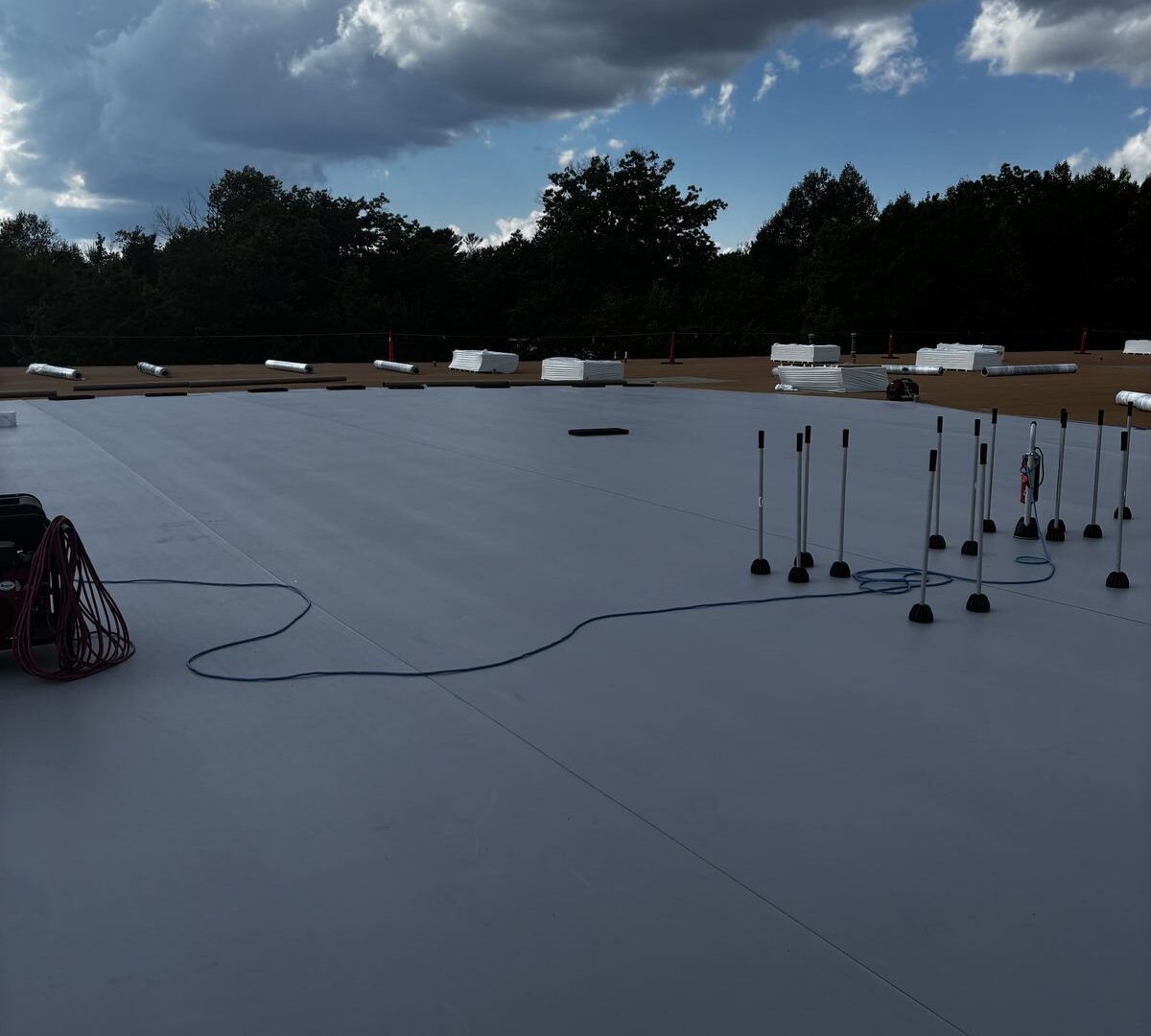
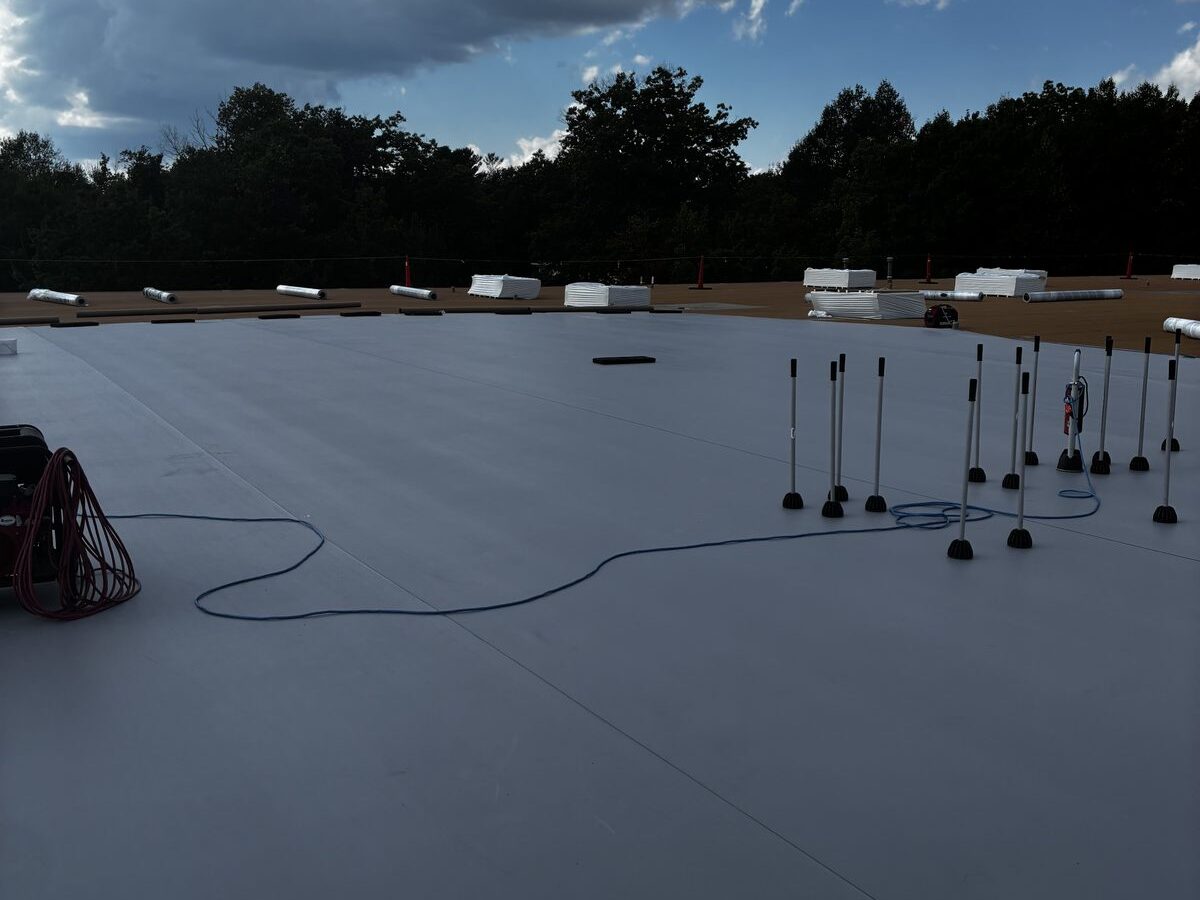
Between November and March a commercial roof in the Fox Valley carries snow, sheds meltwater, freezes, thaws and freezes again dozens of times. Most of the leak calls we take in March and April started as small problems that winter made worse. A little preparation in October goes a long way. Here is what winter does to a roof, and what a fall roof check should cover.
Snow load
Fresh snow is light; wet, packed snow and drifted snow are not. A foot of heavy snow can add 20 pounds per square foot or more, and drifting against parapets, rooftop units and taller adjacent walls concentrates that weight in a few spots. Buildings are designed for the expected load, but older buildings, roofs with ponding areas and roofs that have been re-covered more than once have less margin. Know the design load for your building, watch drift-prone areas after big storms, and have a plan for removal before you need it. Snow should be removed by crews who know how to work on a membrane without damaging it.
Ice dams and blocked drains
Low-slope roofs get ice dams too. When snow melts from building heat and then refreezes at the colder edges, at scuppers or around drains, the meltwater behind the ice has nowhere to go but into the seams and flashings. Drains and scuppers that are clear in the fall are the single best defense. Heat trace on drain bowls and downspouts can help on roofs with a history of freezing.
Freeze-thaw cycling
Every time water gets into a small opening and freezes, it expands and makes the opening larger. On a roof this happens at open seams, cracked sealant, small punctures and the joints in metal edge and coping. It also works on masonry parapets, which shed mortar and let water in behind the wall flashing. A tight roof in October stays tight; a roof with small openings in October has bigger ones by April.
The spring thaw
The leaks show up when everything melts at once. A roof that held all winter can suddenly leak in a dozen places in one warm week because the water trapped in the snowpack and in wet insulation finally finds the openings. This is when moisture surveys are most useful and when repairs turn into insulation replacement if the water has been sitting for months.
The fall checklist
- Clear every drain, scupper, gutter and downspout, and check strainers are in place.
- Walk the whole roof and repair open seams, punctures and blisters before they freeze.
- Inspect and reseal flashings at every rooftop unit, curb, pipe and skylight.
- Check metal edge, coping and parapet walls for loose fasteners and open joints.
- Remove debris, leaves and anything left on the roof by other trades.
- Confirm access hatches and ladders are safe for winter use, and that your snow removal plan is in place.
- Document the roof condition with photos so you have a baseline if there is storm damage.
Get on a schedule
Most of this list is what a preventative maintenance program does twice a year, in spring and fall. The cost of a maintenance visit is a fraction of an emergency repair in February, and it keeps the manufacturer warranty in good standing. If your roof has not been inspected since last winter, now is the time. Call the office or request an inspection and we will get you on the fall schedule.