
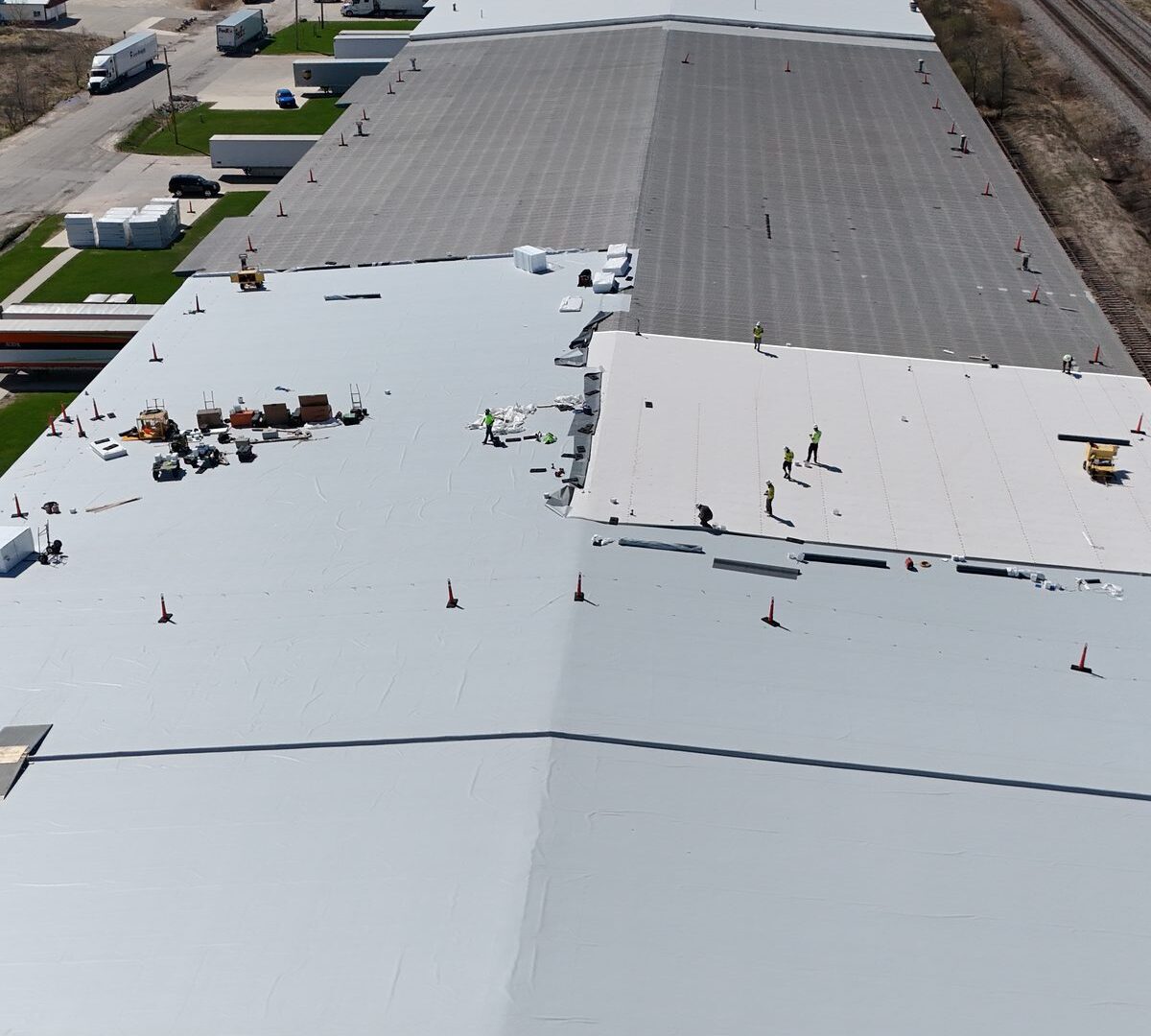
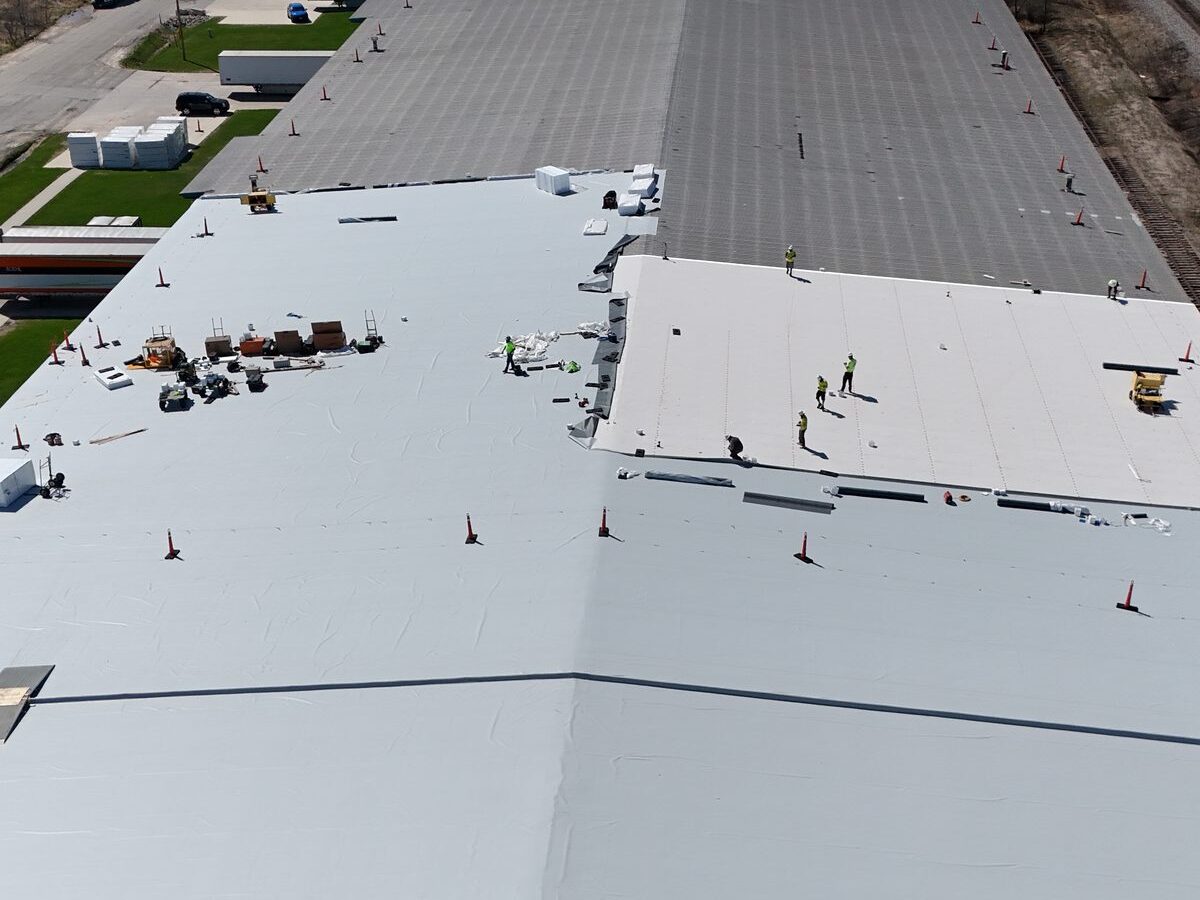
When a low-slope commercial roof is due for replacement, the conversation usually comes down to two single-ply membranes: Thermoplastic Polyolefin (TPO) and Ethylene Propylene Diene Monomer (EPDM). Both are proven systems, both are installed on thousands of buildings across Wisconsin, and both are systems Borsche Roofing installs every season. They are not interchangeable, though. Here is how they compare on the questions building owners actually ask.
What they are
TPO (thermoplastic polyolefin) is a white or light-colored membrane whose seams are heat-welded together, which creates a bond as strong as the sheet itself. EPDM (ethylene propylene diene monomer) is a synthetic rubber membrane, usually black, with seams joined by tape or adhesive. EPDM has been on roofs for more than 50 years; TPO for about 30.
Energy performance
A white TPO roof reflects most of the sun that hits it, which lowers rooftop temperatures and cooling loads in summer. For a building with a lot of air conditioning, such as an office, a clinic or a climate-controlled warehouse, that can be a real operating saving. A black EPDM roof absorbs heat, which is a disadvantage in July but a modest advantage during a Wisconsin winter, when a warmer roof surface helps shed snow and ice. White EPDM is available if reflectivity matters and you prefer rubber.
Durability and weather
EPDM is very flexible and handles the freeze-thaw cycling of our climate well; it tolerates the expansion and contraction of a building without stressing the seams. Its main vulnerability is the seam itself, since tape and adhesive can loosen over decades, and it is a bit more prone to punctures from dropped tools or hail. TPO is more puncture resistant and its welded seams are exceptionally strong, but the membrane is stiffer in cold weather and formulations have varied by manufacturer over the years, so the brand and thickness matter. We generally recommend 60 mil or thicker for either system on a commercial building.
Installation
Both membranes can be fully adhered, mechanically attached or (for EPDM) ballasted with stone. Mechanically attached TPO is often the fastest and most economical installation for a large, open warehouse roof. Fully adhered EPDM is a common choice on roofs with a lot of penetrations, odd shapes or high wind exposure. The condition of the deck and the insulation underneath usually influences the attachment method more than the membrane does.
Cost
Installed prices for the two systems are close, and they move with the price of raw materials, so the difference is rarely the deciding factor. The bigger cost variables are tear-off, insulation, the number of roof details and how the work has to be phased around your operations.
Which one should you choose?
As a general guide: choose TPO when cooling costs, reflectivity or puncture resistance matter most, or on large simple roofs where mechanically attached installation is efficient. Choose EPDM when the roof has many details, when long-term flexibility in cold weather is the priority, or when a ballasted system fits the building. Manufacturer warranties of 20 to 30 years are available on both when they are installed by a certified contractor.
The right answer depends on your building, your budget and how long you plan to own it. We are happy to inspect the roof, walk through both options and put together a proposal for each so you can compare them directly.